
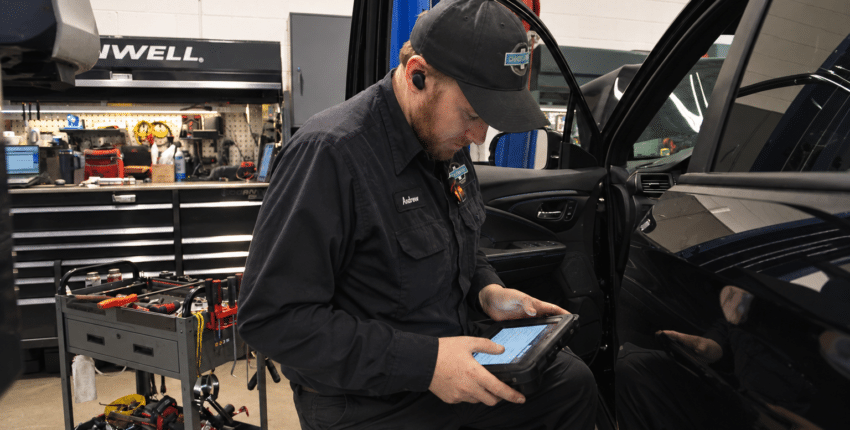
A car that cranks but will not start can send you in a lot of different directions.
Fuel pump?
Starter?
Ignition coils?
Crank sensor?
Security system?
This 2011 Toyota Corolla arrived at 34th Street Garage on a tow truck because the engine would crank but would not start.
The technician began with testing instead of guessing.
The Corolla had power where it should have had power, but it was missing two things the engine needed in order to run:
spark and injector pulse.
That narrowed the problem, but it did not immediately tell us why those signals were missing.
Then another clue showed up around the ignition.
The Engine Cranked Normally but Would Not Fire
The starter was doing its job.
The engine was turning over.
Testing showed battery voltage and ground at the ignition coils.
There was also battery voltage available at the injectors.
But there was no spark and no injector pulse.
The scan did not provide a normal engine fault code that explained the problem.
That meant replacing an ignition coil, fuel pump or sensor simply because the engine would not start would have been guessing.
The testing had already shown that something else was going on.
The Security Light Was Acting Differently
With the key on, the technician noticed that the security light continued blinking instead of behaving normally.
That pointed the investigation toward the immobilizer system.
The technician scanned that system and continued checking the starting and ignition circuits.
At this point, there still was not a failed part sitting there with a flashing sign saying, “Replace me.”
Then a conversation with the owner provided an important piece of information.
An aftermarket cover had been installed around the ignition the same day the Corolla stopped starting.
That recent change deserved attention.
Remove the Cover. Try the Car Again.
The aftermarket ignition cover was removed.
The Corolla started normally.
That was the breakthrough.
We do not need to guess exactly how that particular cover affected the security system to recognize the importance of what happened.
The car started before the cover was installed.
It would not start after the cover was installed.
Testing showed unusual security system behavior.
And once the cover was removed, the vehicle started again.
That is why one of the most useful questions during diagnosis can be incredibly simple:
What changed right before the problem started?
A recent repair, accessory, installation or modification may have nothing to do with the problem.
But sometimes it is the clue that saves a lot of unnecessary parts replacement.
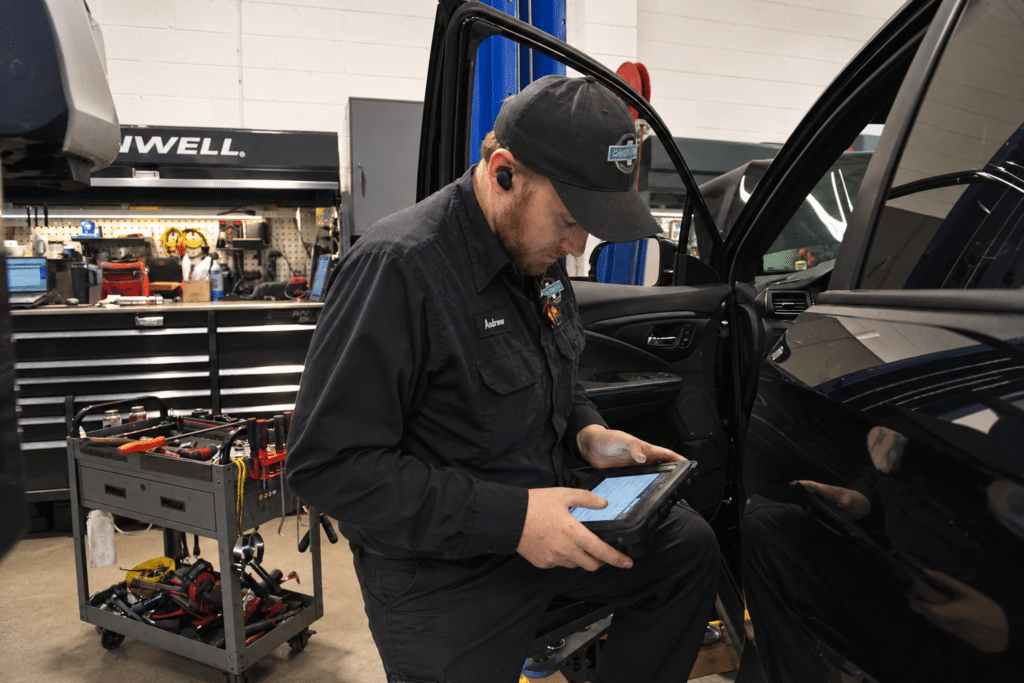
Getting It Started Was Only Part of the Visit
The Corolla had already needed a tow once.
The owner did not want another surprise if there were other problems developing somewhere else on the car.
So after solving the immediate starting problem, we performed a complete bumper to bumper inspection.
That is something we recommend at least once a year for vehicles that are not already receiving an equivalent complete inspection during regular service.
A yearly inspection cannot guarantee that a car will never break down.
Nothing can.
What it can do is give you a much better picture of what is wearing, what maintenance is coming due and what deserves attention before it becomes a bigger surprise.
On this Corolla, the inspection found several things worth knowing about.
The Front Brakes Were Down to About 2 Millimeters
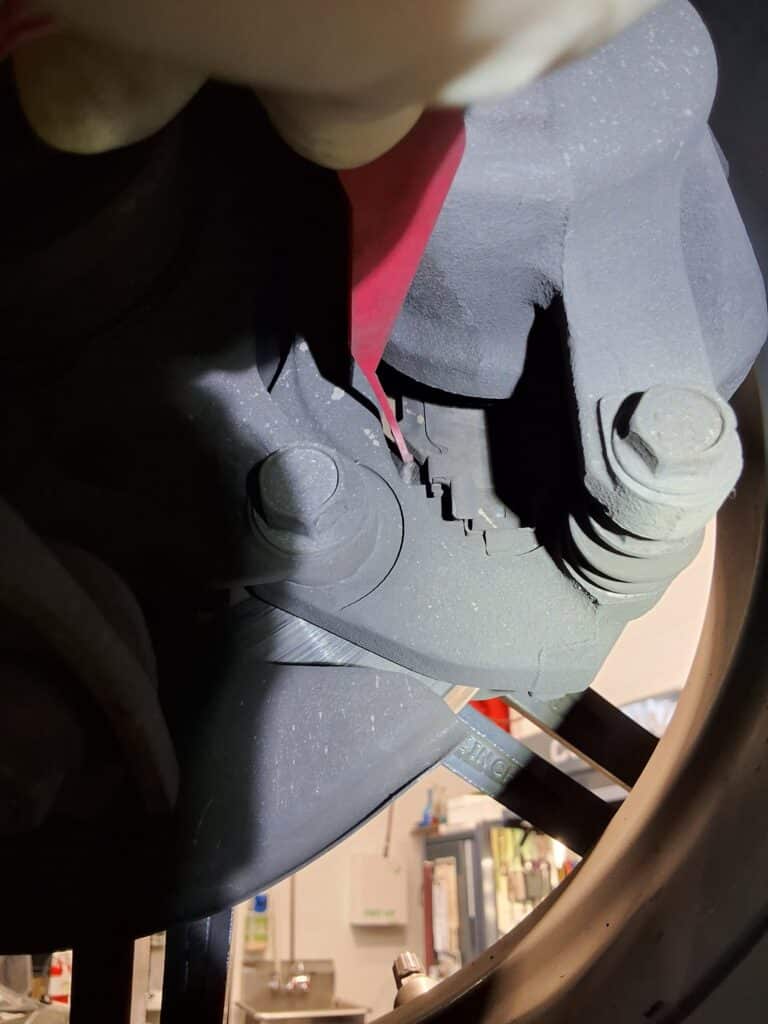
The front brake pads measured about 2 mm.
That is the kind of finding that deserves attention rather than waiting for grinding or metal contact.
The owner chose to replace the front brake pads and rotors during this visit.
All Three Brake Lights Were Out
The inspection uncovered another safety issue that had nothing to do with the original starting problem.
None of the three brake lights were working.
That matters because the driver may not know the brake lights are out from behind the steering wheel.
The repair included replacement of the brake light switch and verification of the system.
This is exactly the kind of thing a broader inspection can catch.
The car came in because it would not start.
The brake lights were a completely separate problem.
Without looking at the entire vehicle, the two issues might never have crossed paths during the same visit.
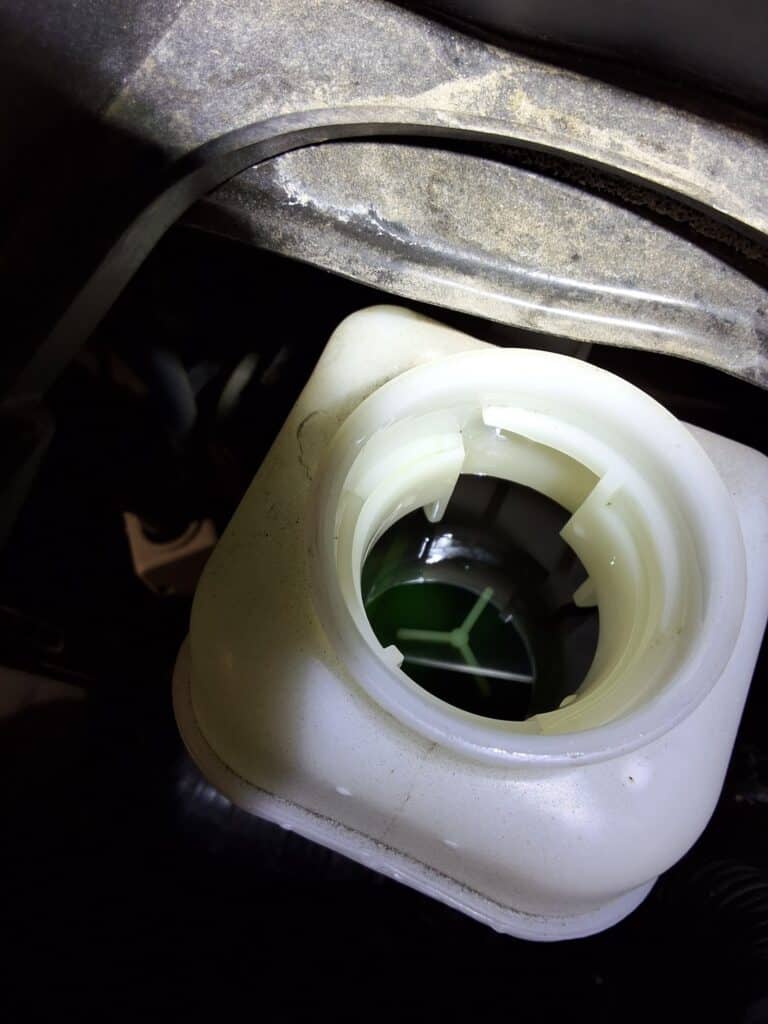
The Brake Fluid Was Dark
The brake fluid also showed that service was due.
The owner approved a brake fluid service along with the front brake repair.
That is another good example of why inspections are useful.
Not every problem announces itself with a warning light or a strange noise.
Fluid condition can tell us something before there is a noticeable symptom from the driver’s seat.
The Spark Plugs and Filters Needed Attention Too
The inspection showed spark plugs that appeared to be original equipment and were due for service.
The engine air filter was dirty.
The cabin filter was dirty too.
The owner chose to address those maintenance items while the vehicle was already in the shop.
The spark plugs were replaced, along with the engine air filter and cabin filter.
An induction service and transmission service were also completed.
Not Every Inspection Finding Means “Fix It Today”
A good inspection is not supposed to turn every observation into an emergency.
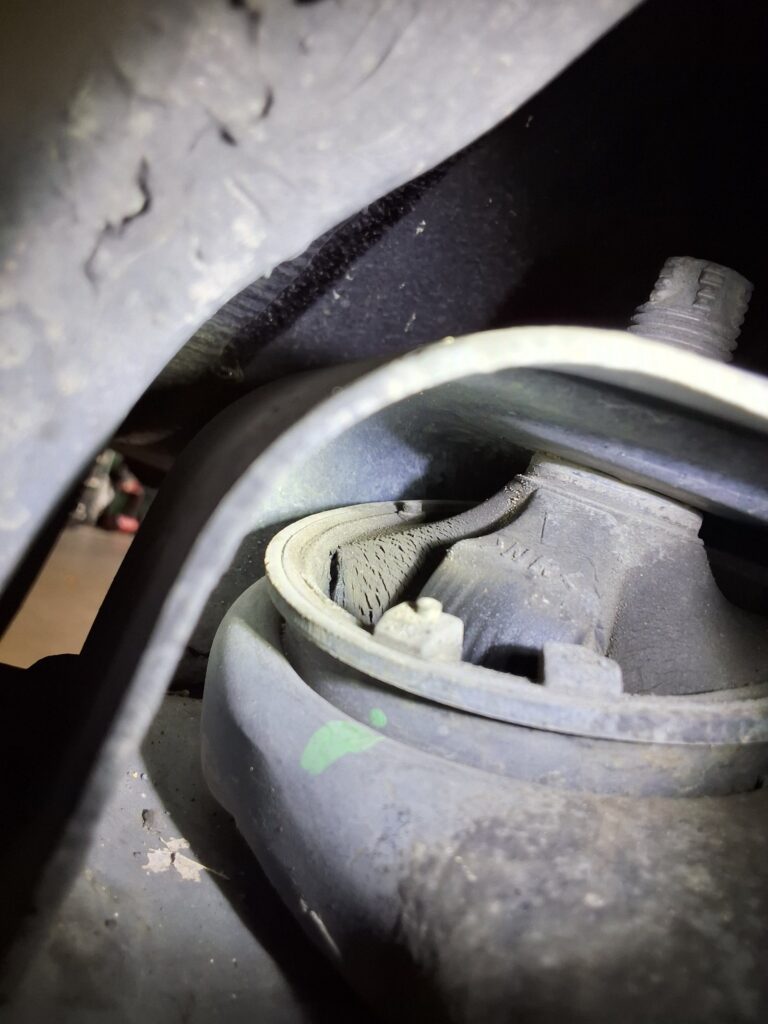
The Corolla also had cracking beginning in the front control arm bushings.
The front and rear struts appeared to be original equipment and were noted for age and mileage.
Those findings were documented so the owner knew they existed.
They were not part of the completed repair during this visit.
That distinction matters.
Some findings need immediate attention.
Some are maintenance.
Some can be watched and planned for.
Giving the owner that information is far more useful than treating every yellow mark on an inspection like a crisis.
Why We Recommend a Thorough Inspection at Least Once a Year
Most people do not spend their weekends underneath their cars measuring brake pads, checking suspension bushings or looking at fluid condition.
That is understandable.
But vehicles change gradually.
Brake pads wear.
Rubber ages.
Fluids deteriorate.
Bulbs and switches fail.
Maintenance intervals come due.
A thorough inspection at least once a year can help build a picture of those changes.
If the vehicle already receives an equivalent inspection during regular service, there is no reason to duplicate it just because the calendar changed.
The point is simply to make sure somebody is periodically looking at the whole vehicle, not only the part that brought it into the shop.
An Inspection Cannot Prevent Every Tow Truck
This Corolla is also a good example of why we do not promise that an inspection will prevent every breakdown.
The original starting problem was unusual.
A recently installed ignition cover appears to have interacted with the circumstances around the vehicle’s security system, and removing it restored normal starting.
That is not something a routine maintenance checklist would necessarily predict months in advance.
But once the car had already required a tow, taking the opportunity to inspect everything else made sense.
The inspection found:
front brakes needing attention
all three brake lights not working
dark brake fluid
maintenance items that were due
dirty filters
and developing suspension wear worth monitoring
Those were real conditions the owner could now make decisions about.
Diagnosis Solved Today’s Problem. Inspection Helped Plan for Tomorrow.
The first job was getting the Corolla running again.
Testing showed that the engine had power where expected but was missing spark and injector pulse.
The security system behavior provided another clue.
Learning that something had just been installed around the ignition changed the direction of the investigation.
Removing that cover restored normal starting.
Then the bumper to bumper inspection gave the owner a much broader picture of the vehicle.
That is a combination we like.
Solve the problem that brought the car in. Then make sure the owner knows what else may be coming.
Sometimes that can help prevent another surprise.
And even when it cannot prevent the next problem, it gives the owner more information to plan for it.
TOYOTA COROLLA NO START FAQ
Why would a Toyota Corolla crank but not start?
There are many possible causes. A vehicle can crank normally and still have a problem involving fuel delivery, ignition, engine sensors, security systems or other electrical components.
Did this Corolla need a starter?
No. The engine was cranking normally. The problem involved missing spark and injector pulse while the security system was behaving abnormally.
What fixed this Corolla?
The shop learned that an aftermarket ignition cover had been installed the same day the problem began. When that cover was removed, the Corolla started normally.
Do we know exactly how the ignition cover affected the security system?
The repair record does not establish the exact electronic mechanism. What it does document is abnormal security system behavior and normal starting after the recently installed ignition cover was removed.
Why inspect the whole car after fixing the original problem?
The vehicle had already needed a tow, and the owner wanted a clearer picture of anything else that might need attention. The inspection found several unrelated safety, maintenance and wear items.
How often should a vehicle get a complete inspection?
At 34th Street Garage, we recommend a thorough bumper to bumper inspection at least once a year if the vehicle is not already receiving an equivalent inspection during routine service.
Does an annual inspection guarantee my car will not break down?
No. It can identify many worn components, maintenance needs and developing problems, but no inspection can predict every future failure.
TOYOTA SERVICE AND VEHICLE DIAGNOSIS IN SEATTLE
If your Toyota will crank but will not start, or you simply want a clearer picture of the condition of your vehicle, we can inspect it and explain what we find.
34th Street Garage
2410 34th Ave W
Seattle, WA 98199
206-283-3448