Nine months is a long time for a car to sit.
This 2014 Scion FR-S came to 34th Street Garage after being parked for about nine months. The brakes had failed while it was being driven, and by the time it arrived at the shop, the car would not start either.
It had only about 49,000 miles on the odometer.
Still, getting it ready to drive again was going to take much more than installing a battery and turning the key.
The first inspection found problems with the brake system.
Then the electrical diagnosis uncovered something that had been hidden inside the wiring harness.
Rodents had been there too.
The Brake System Needed Attention First
The original concern included a brake failure while driving.
Inspection found the right front brake hose damaged, and the brake fluid reservoir was empty.
The right front tire area was also covered in brake fluid.
The damaged hose was replaced, the brake system was bled, and the fluid was serviced.
There was more brake work ahead.
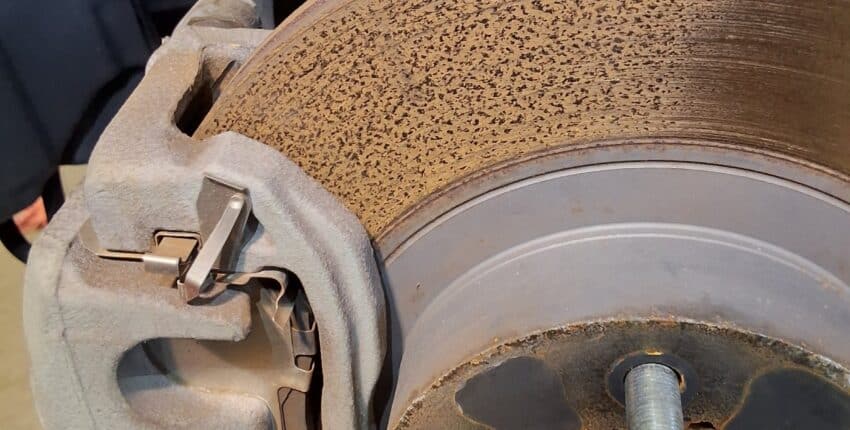
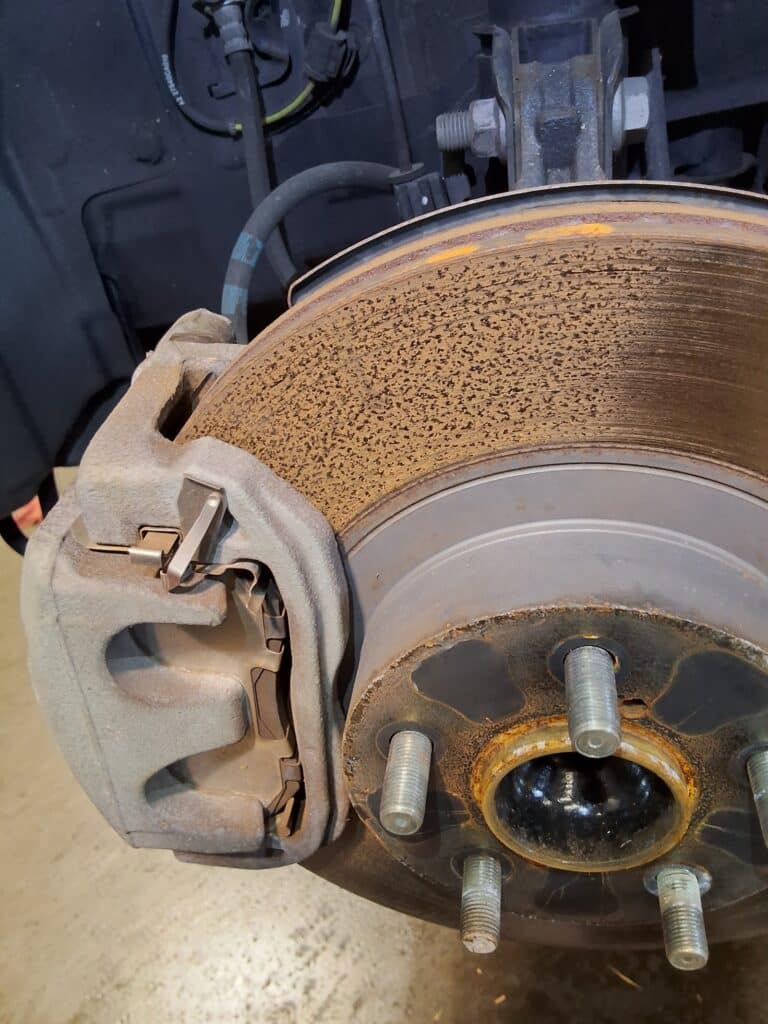
Both the front and rear rotors showed heavy rust and pitting.
The pads still had measurable thickness, but the rotor condition led to replacement of the front and rear pads and rotors.
The Car Would Not Start Either
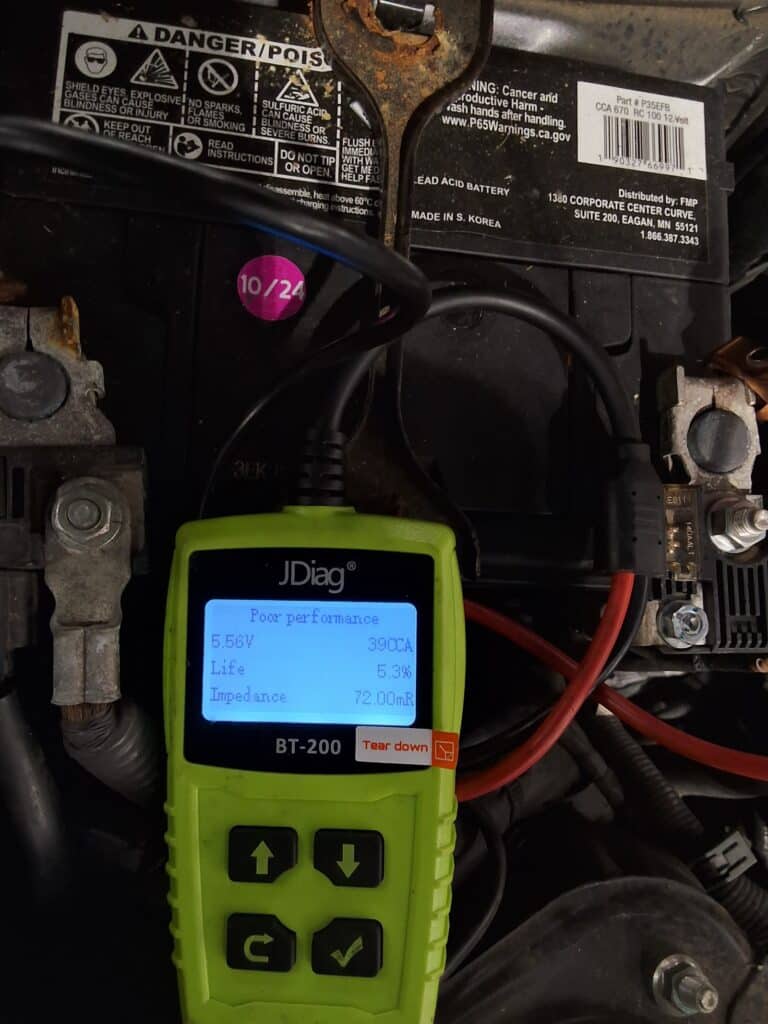
The battery was severely depleted and would not accept a charge.
Testing showed that the alternator was charging properly.
The battery itself needed replacement.
This is an important distinction when a vehicle has been sitting.
A no start condition does not automatically mean the charging system has failed.
In this case, testing separated the battery problem from the alternator.
The ABS Problem Took More Digging
After the initial brake and wheel speed sensor work, fault codes remained and communication with the ABS system was still missing.
At that point, the diagnosis moved into the wiring.
The technician tested the circuits between the ABS control module and the right front wheel speed sensor.
Both wheel speed sensor circuits tested open.
That meant there was a break somewhere between the control module and the sensor connector.
Finding exactly where that break was located took more work.
Then We Found the Rodent Damage
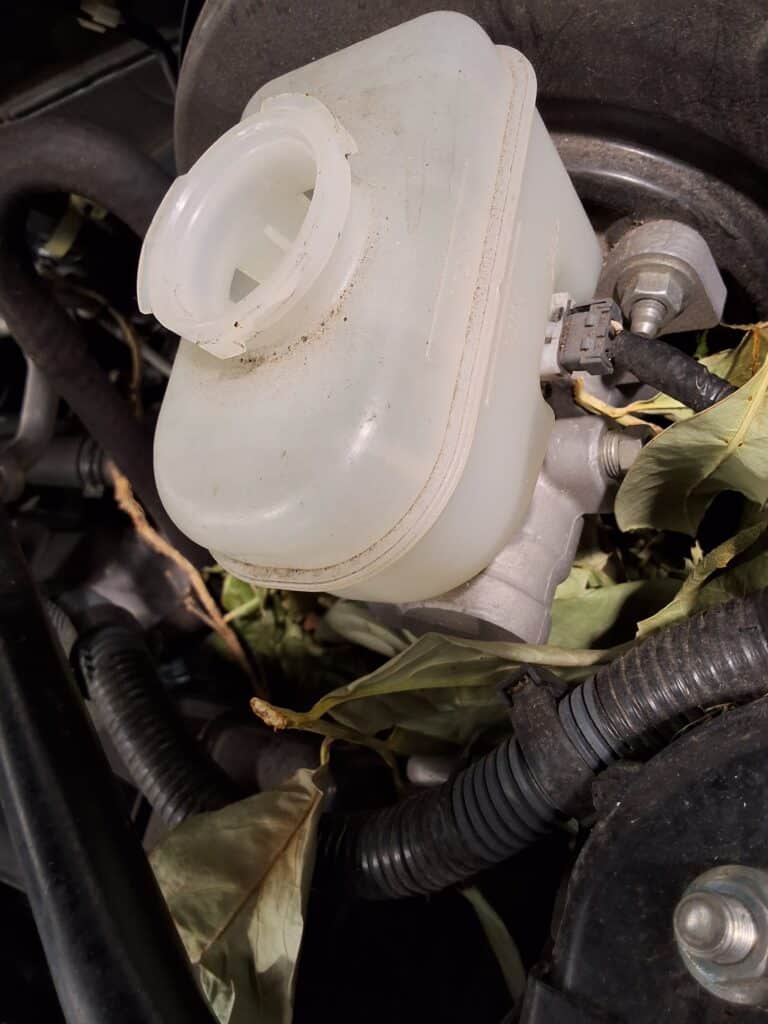
Opening up the harness area revealed a large amount of leaves and debris.
Several wires had been chewed completely apart.
Two of those damaged wires were confirmed to be part of the right front wheel speed sensor circuits.
The damaged wiring matched what the electrical testing had already shown.
There was an open circuit.
Now we knew why.
Five damaged wires were repaired.
But the ABS communication problem still was not finished.
One Broken Wire Was Hidden Deeper in the Harness
After the first wiring repairs, the technician kept testing.
Power and ground circuits at the ABS connector were traced and checked.
Most tested correctly.
One ignition power circuit did not.
The technician followed that circuit back toward the fuse panel and deeper into the wiring harness.
Eventually, another broken wire was found farther back inside the harness.
Roughly 18 inches of wire had pulled back into the harness before the break was located.
That is the kind of electrical problem that cannot be solved by reading a fault code and replacing the first part named on a scan tool.
The circuit had to be tested.
Then traced.
Then opened up until the actual break was found.
The ABS Module Was Part of the Repair Too
Even after repairing the damaged wiring, communication with the ABS module remained a problem.
The diagnostic notes concluded that the rodent damaged wiring had created a short that also damaged the module.
The ABS module was replaced and programmed as part of the completed repair.
This turned what initially looked like a brake and starting problem into a much deeper electrical repair.
That is exactly why a vehicle that has been sitting should be inspected as a complete car rather than treated as a simple jump start.
The Full Inspection Found More
Once the immediate brake, battery and electrical problems were being addressed, the rest of the car still needed attention.
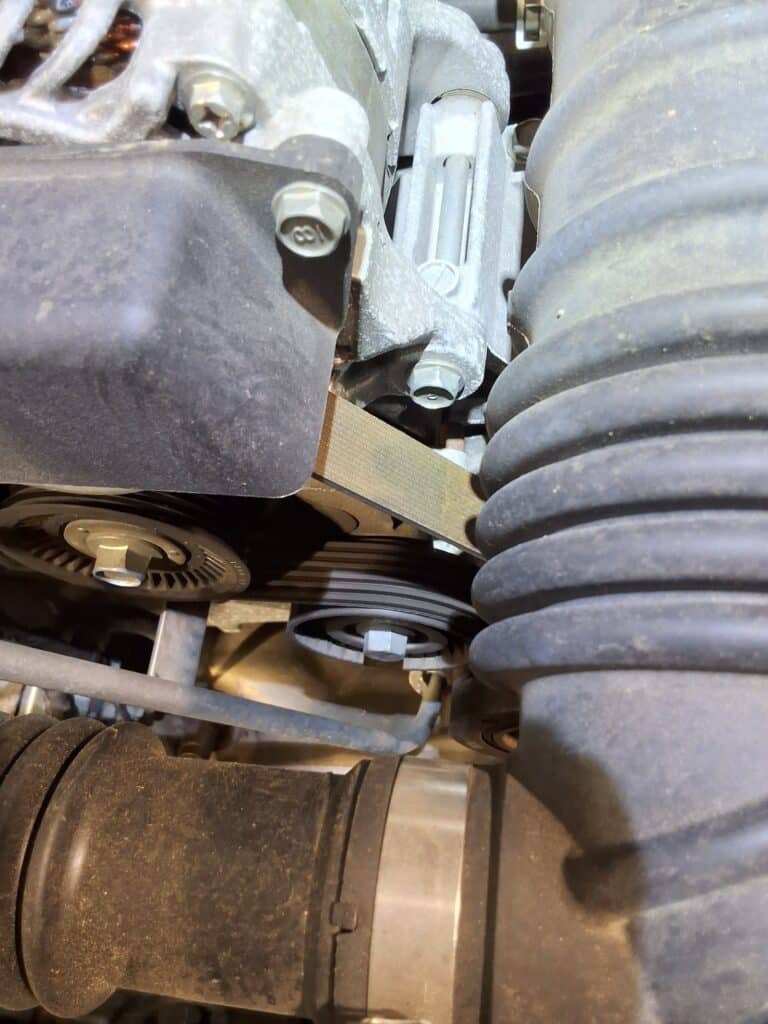
The inspection found worn drive belts.
Several coolant hoses were described as hardened with age.
The cabin filter was packed with leaves and debris.
There was no recent service history available for several fluids.
The work performed included an oil change, cooling system service, rear differential service and drive belt replacement.
Two tires were also mounted and balanced.
This is where bringing a stored vehicle back into regular use becomes different from fixing one isolated problem.
The goal is to understand the condition of the whole vehicle before putting it back into normal driving.
Sitting Still Does Not Mean Nothing Is Happening
A parked car may not be adding miles, but condition still matters.
The battery can discharge.
Brake surfaces can corrode.
Rubber components can age.
Debris can collect in sheltered areas.
And, as this FR-S showed, wiring can become vulnerable to rodent damage.
That does not mean every vehicle parked for several months will have the same problems.
This car had its own combination of issues.
The important part is not assuming that low mileage or lack of use means the vehicle is automatically ready to drive.
What Should Be Checked Before Driving a Car That Has Been Sitting?
If a vehicle has been parked for months, it is worth checking more than whether the engine starts.
Brakes deserve a close look.
So do the tires.
The battery and charging system should be tested.
Fluids should be inspected.
Belts and hoses should be checked for condition.
And if there are warning lights, electrical problems, nests, leaves or other signs of rodent activity, the wiring may need a closer inspection.
The longer a car has been sitting, the more useful a complete inspection can become.
This FR-S Needed a Plan, Not One Quick Fix
The car arrived with several obvious problems.
The brakes had failed.
It would not start.
Warning lights were present.
Those were only the starting points.
The brake system needed repair.
The battery needed replacement.
Electrical testing found open circuits.
The open circuits led to rodent damaged wiring.
Further testing uncovered another broken wire hidden deeper in the harness.
And the ABS module ultimately needed replacement and programming.
At the same time, the broader inspection identified maintenance and age related items that needed attention before regular use resumed.
That is what it took to bring this Scion FR-S back to the road.
Not one part.
A process.
Inspect it.
Test it.
Repair what the evidence shows.
Then keep checking until the systems are working the way they should.
PARKED VEHICLE FAQ
Is a car okay to drive after sitting for several months?
Maybe, but starting the engine is not enough to answer that question. The brakes, tires, battery, fluids, belts, hoses and warning lights should all be considered.
Can a battery go bad while a car is sitting?
A battery can become discharged during extended storage. On this FR-S, the battery was severely depleted and unable to accept a charge, while the alternator tested properly.
Can brakes rust while a car sits?
Brake rotors can develop corrosion while a vehicle is parked. On this FR-S, both the front and rear rotors had significant rust and pitting.
Why would rodents damage vehicle wiring?
This FR-S had leaves and debris around the harness and several wires that had been chewed apart. When there is evidence of rodent activity, wiring and hidden areas may need closer inspection.
Did the rodent damage cause the ABS problem?
The diagnostic testing found open circuits in the wheel speed sensor wiring, and inspection found chewed wires in those circuits. After wiring repairs, the shop continued testing and ultimately replaced and programmed the ABS module as part of the repair.
Does low mileage mean a parked car will need less work?
Not necessarily. This FR-S had only about 49,000 miles, but its condition still required significant brake, battery, wiring and maintenance work.
VEHICLE INSPECTION AND ELECTRICAL REPAIR IN SEATTLE
If you have a vehicle that has been sitting for months, a complete inspection can help you understand what it needs before returning to regular use.
34th Street Garage
2410 34th Ave W
Seattle, WA 98199
206-283-3448