If your Volkswagen Tiguan keeps needing coolant, finding the first visible leak may not tell the whole story.
We recently inspected a 2021 Volkswagen Tiguan S at 34th Street Garage after the owner reported having to refill the coolant twice during the year.
The right first step wasn’t guessing which Volkswagen cooling system part had failed.
It was testing the vehicle.
A cooling system pressure test and inspection found a leaking coolant reservoir and a failed reservoir cap. But we didn’t stop after finding the first problem.
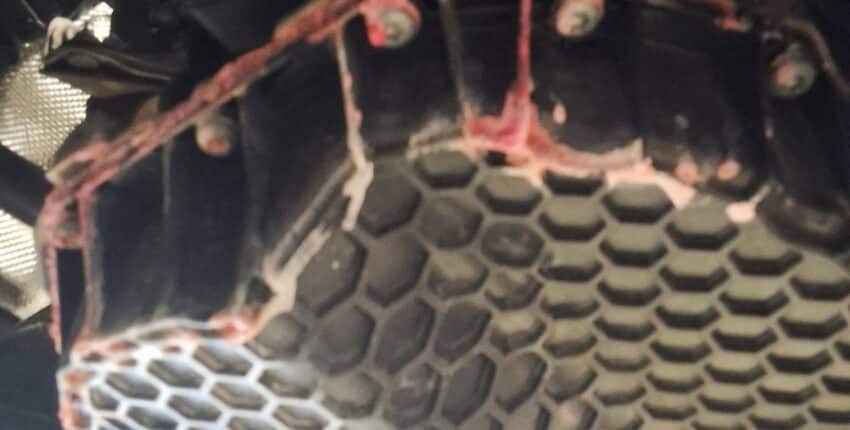
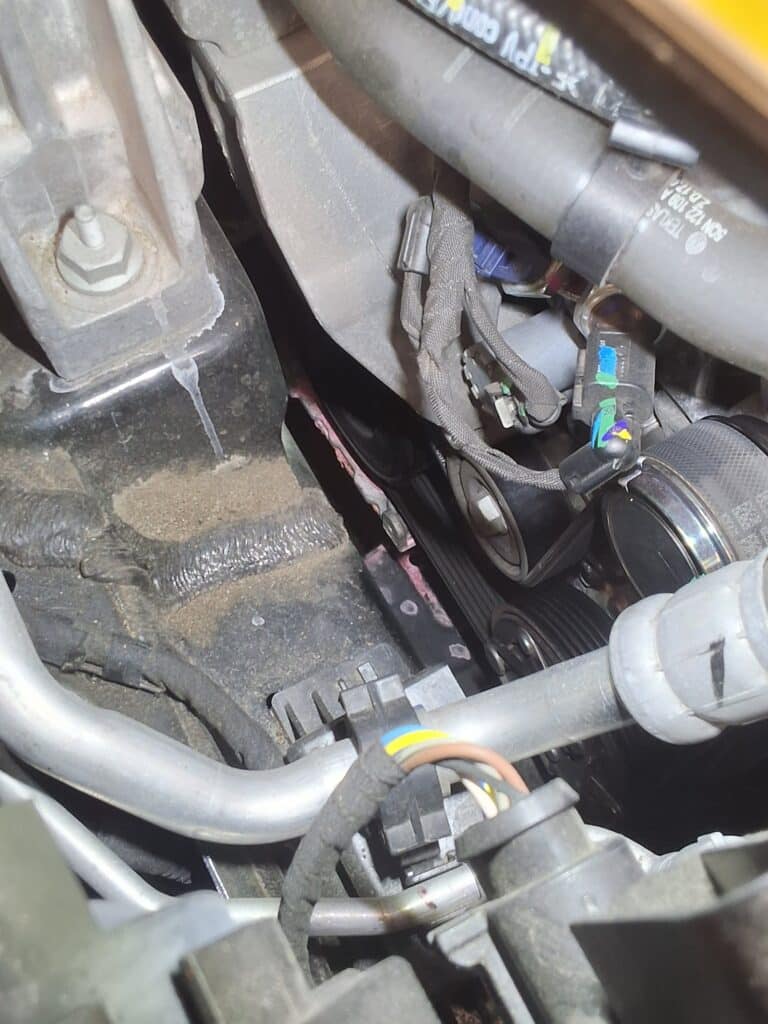
There was also a separate leak at the engine oil cooler assembly, along with visible dried pink coolant residue in other areas of the engine compartment.
That led to a larger repair planning question involving the water pump.
This one Tiguan doesn’t tell us what is wrong with every Tiguan that loses coolant. What it does show is why a repeated coolant loss complaint deserves a complete inspection instead of simply replacing the first part that appears wet.
Losing Coolant Is a Symptom, Not a Diagnosis
When someone tells us:
“I keep having to add coolant.”
that’s useful information.
But it doesn’t identify the failed component.
Coolant can escape from different parts of the system, and once it leaves the source, it can travel along hoses, brackets, engine components and covers before it drips or dries somewhere else.
That’s why the location of a pink or white stain isn’t always enough by itself to identify where the leak began.
On this Tiguan, we combined what we could see with a cooling system pressure test and inspection.
That’s what led us to the confirmed reservoir and cap problems.
What We Found at the Coolant Reservoir
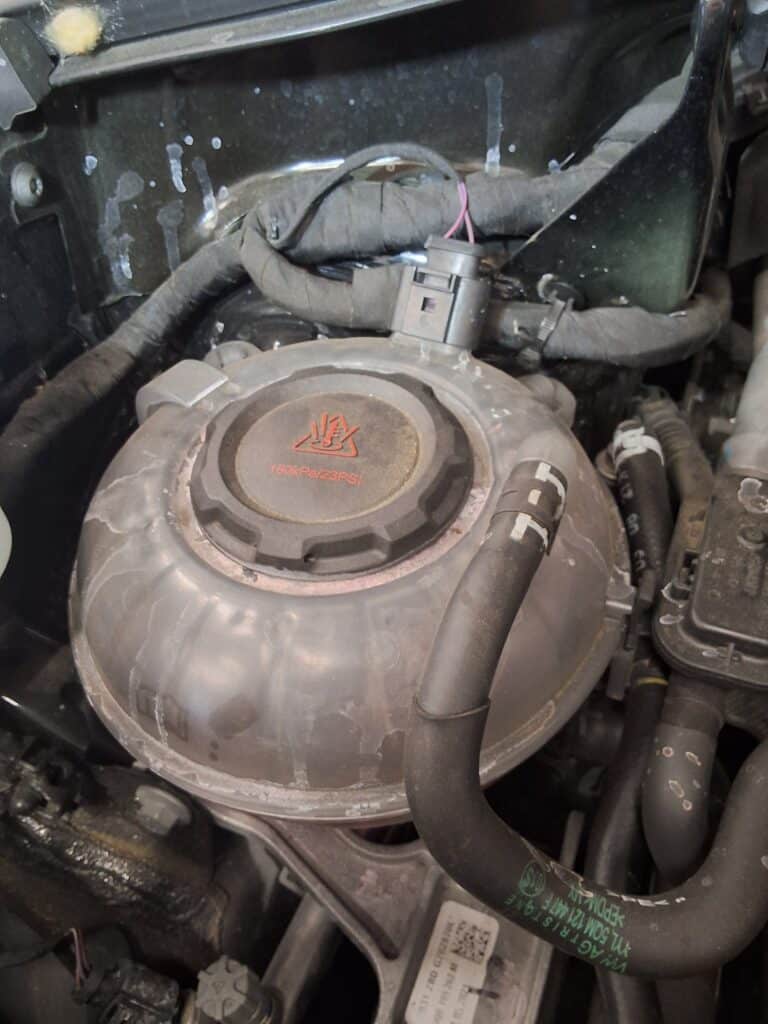
The coolant reservoir on this Tiguan was leaking, and the reservoir cap had also failed.
The residue visible around the tank was useful evidence, but the repair decision wasn’t based on appearance alone.
The cooling system was pressure tested and inspected to determine where coolant was actually escaping.
The reservoir and cap were confirmed problems and became part of the repair plan.
But the inspection continued.
That’s important because finding a problem is not necessarily the same thing as finding the only problem.
Dried Coolant Can Leave a Trail
Volkswagen and other European coolants can leave obvious colored residue after they dry.
In this case, there was dried pink coolant evidence visible in more than one area.
That can be helpful during diagnosis, but technicians still have to interpret what they’re seeing correctly.
Coolant may run downward from its source.
Airflow can move it.
It can collect on a lower component.
It can dry somewhere away from the component that originally leaked.
So a stain underneath the engine doesn’t necessarily mean the component directly above the stain is the source.
That is one reason pressure testing and inspection matter.
Why Finding the Reservoir Leak Didn’t End the Inspection
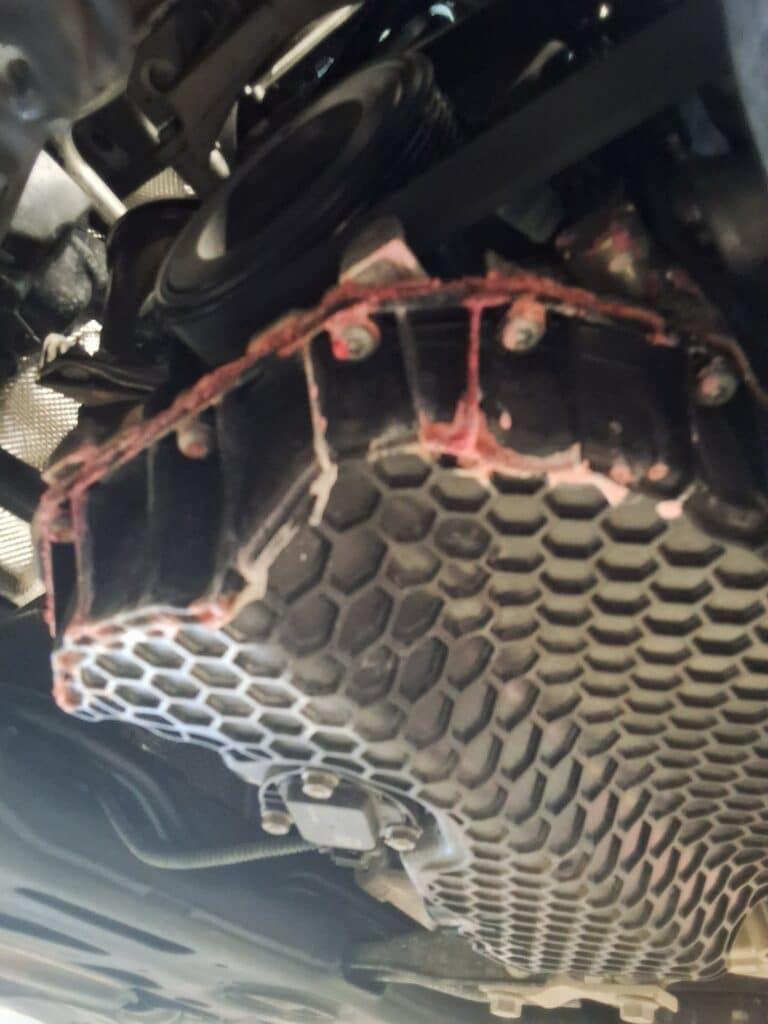
During the same inspection, we also found a separate leak at the engine oil cooler assembly.
That’s an important distinction.
We’re not saying the oil cooler was automatically responsible for the owner’s original coolant loss complaint.
The oil cooler assembly was another leak discovered while inspecting the vehicle.
The repair order documented it separately, and the repair required fresh seals, gaskets and cleanup of oil residue.
This is a good example of why a complete vehicle inspection can matter even after the original complaint appears to have an answer.
The original concern brought us into the cooling system.
The inspection gave us a broader picture of the vehicle.
Then We Had to Make a Water Pump Decision
The water pump created a different type of decision.
Visible dried pink coolant residue was present in the water pump area, and the other approved repairs required access in close proximity to the pump.
The technician recommended replacing the water pump while that access was available.
That’s different from saying:
“We found the first leak, therefore every nearby part needs to be replaced.”
It also isn’t the same as claiming every Tiguan water pump should be replaced whenever another cooling-system component needs work.
The question was specific to this vehicle and this repair:
How much of the access needed for the water pump is already being performed during the other approved repairs?
If substantial work would have to be repeated later to reach the same area again, it can make sense to discuss taking care of the water pump while the area is already accessible.
The owner approved that plan.
What Does “Overlapping Labor” Mean?
This part of the repair is worth explaining because “while we’re in there” can mean very different things depending on the situation.
Modern engine compartments are tightly packaged.
Getting to one component may require removing covers, brackets, hoses, belts or other pieces just to create working access.
If another component sits in the same area, some of the labor required to reach it may already be happening.
That doesn’t automatically mean replacing everything nearby is a good idea.
A responsible repair discussion should separate a few questions:
What has definitely failed?
What evidence did the inspection find?
What components are already accessible because of the approved repair?
How much labor would have to be repeated if another component needed service later?
Does taking care of that component now make sense for this particular vehicle?
Those are repair-planning decisions.
They aren’t universal rules.
What Was Actually Repaired on This Tiguan?
The owner approved the repair plan.
The major work included:
Coolant reservoir replacement
The leaking reservoir was replaced.
Coolant reservoir cap replacement
The failed cap was replaced.
Engine oil cooler assembly repair
The leaking oil cooler assembly was replaced/resealed using the required gaskets and seals.
Water pump replacement
The water pump and associated seals were replaced while repair access was available.
The cooling system was then refilled with the correct vehicle specific coolant as part of the repair procedure.
The important takeaway isn’t that these four parts should automatically be replaced on another Tiguan.
The takeaway is how the repair developed from the original complaint.
The Customer Started With One Simple Observation
The owner didn’t arrive saying:
“My coolant reservoir and cap are leaking, my oil cooler needs replacement and I’d also like a water pump.”
The useful information was much simpler:
Coolant had needed to be refilled twice during the year.
That’s enough to start a diagnostic conversation.
Customers don’t need to identify the leaking component before calling the shop.
They need to tell us what they’ve noticed.
Then we can test the vehicle.
Does a Pink Coolant Stain Tell You Exactly What’s Leaking?
Not necessarily.
Dried coolant residue is useful evidence.
It can tell us coolant has been present in an area.
But coolant can move from the original leak before it dries.
That’s why we don’t want to look at the lowest pink stain underneath the vehicle and automatically replace the component closest to it.
We want to determine where the fluid started escaping.
Pressure testing, visual inspection and the location and pattern of the residue all become pieces of the same diagnosis.
Is It Okay to Keep Adding Coolant?
If the coolant level is dropping repeatedly, continuing to top it off doesn’t answer why the coolant is disappearing.
Adding coolant may temporarily restore the level, but it isn’t the repair.
Repeated coolant loss deserves inspection.
Cooling systems operate under heat and pressure, and maintaining the correct coolant level is important to the engine’s ability to control temperature.
If you’ve had to add coolant more than once, mention that when scheduling the vehicle.
What If My Tiguan Isn’t Overheating?
A vehicle doesn’t necessarily have to be overheating before a coolant leak deserves attention.
This Tiguan came in because coolant had required repeated topping off.
That history was enough reason to investigate the system.
Waiting for a temperature warning isn’t necessary before checking why the level keeps dropping.
The earlier question is simpler:
Why are we losing coolant?
Do All Volkswagen Tiguans Have These Same Leaks?
No.
This article is based on one real 2021 Volkswagen Tiguan repaired at 34th Street Garage.
It would be a mistake to take the findings from this vehicle and automatically apply them to every Tiguan.
Another Tiguan with coolant loss might have a completely different source.
It may have one leak.
It may have more than one.
It may have a leak in an entirely different area.
Real repair experience helps us know where and how to inspect.
It doesn’t replace diagnosis.
Why We Don’t Diagnose a Volkswagen From Its Reputation
Certain vehicle models develop reputations online for particular repairs.
That information can sometimes give a technician useful background.
But it can’t tell us what has failed on the vehicle sitting in front of us.
A symptom may have several possible causes.
A previous Tiguan repair may give us experience.
Neither one replaces inspection and testing.
At 34th Street Garage, the goal is to determine what this particular vehicle needs and explain why.
What Should I Tell the Shop If My Tiguan Is Losing Coolant?
You don’t need to know the name of the leaking component.
Useful information includes:
How often you’ve needed to add coolant
Whether you see fluid on the ground
Whether you’ve noticed a sweet coolant smell
Whether you’ve seen a warning message
Whether the coolant level drops after driving
Whether you’ve noticed any temperature concerns
And if you have a photo of where you’re seeing residue or fluid, that can be useful too.
The diagnosis still comes from inspecting the vehicle.
VW Tiguan Coolant Leak FAQ
Why does my Volkswagen Tiguan keep losing coolant?
There isn’t one answer that applies to every Tiguan. A drop in coolant level means the system should be inspected for the actual source. On the 2021 Tiguan in this article, we confirmed a leaking reservoir and failed cap and found additional issues during the inspection.
Does pink residue mean I found the coolant leak?
It tells you coolant has been present in that area, but it may not identify the original source. Coolant can run or collect somewhere else before drying.
Does a Tiguan losing coolant automatically need a water pump?
No. The correct repair depends on the actual findings. On this vehicle, dried coolant residue was visible near the water-pump area, and the pump was replaced while overlapping access from other approved repairs was available.
Can my Volkswagen have more than one leak?
Yes. More than one issue can exist at the same time. That’s why finding one problem shouldn’t automatically end an inspection when other evidence suggests there may be more to find.
Why pressure-test a cooling system?
A pressure test helps technicians look for leakage under controlled pressure rather than relying only on whatever happens to be dripping when the vehicle arrives.
Should I wait until my Tiguan overheats?
If the coolant level is repeatedly dropping, you don’t need to wait for an overheating event before having the cause checked.
Volkswagen Tiguan Coolant Leak Diagnosis in Magnolia
If your Volkswagen Tiguan keeps losing coolant, you don’t need to diagnose it before making an appointment.
Tell us what you’ve noticed.
We’ll inspect the vehicle, explain what we find and help you understand which repairs are confirmed, which decisions depend on access and condition, and what makes sense for your vehicle.
34th Street Garage
2410 34th Ave W
Seattle, WA 98199
206-283-3448
Visit the current online booking option to schedule an appointment.