
A 2006 Land Rover LR3 HSE with about 128,700 miles recently came into 34th Street Garage for a parking-brake concern. Diagnosis found that a weak battery was affecting operation of the electric parking brake, and installing a new battery restored normal operation.
The courtesy inspection uncovered a completely separate issue that had the potential to become much more serious.
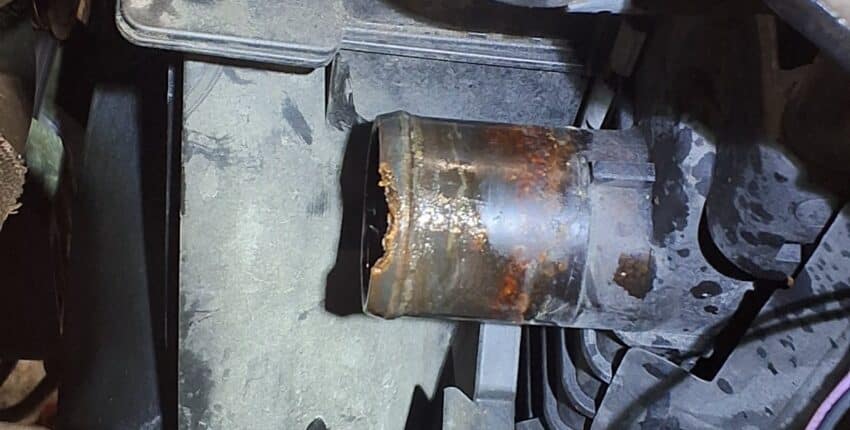
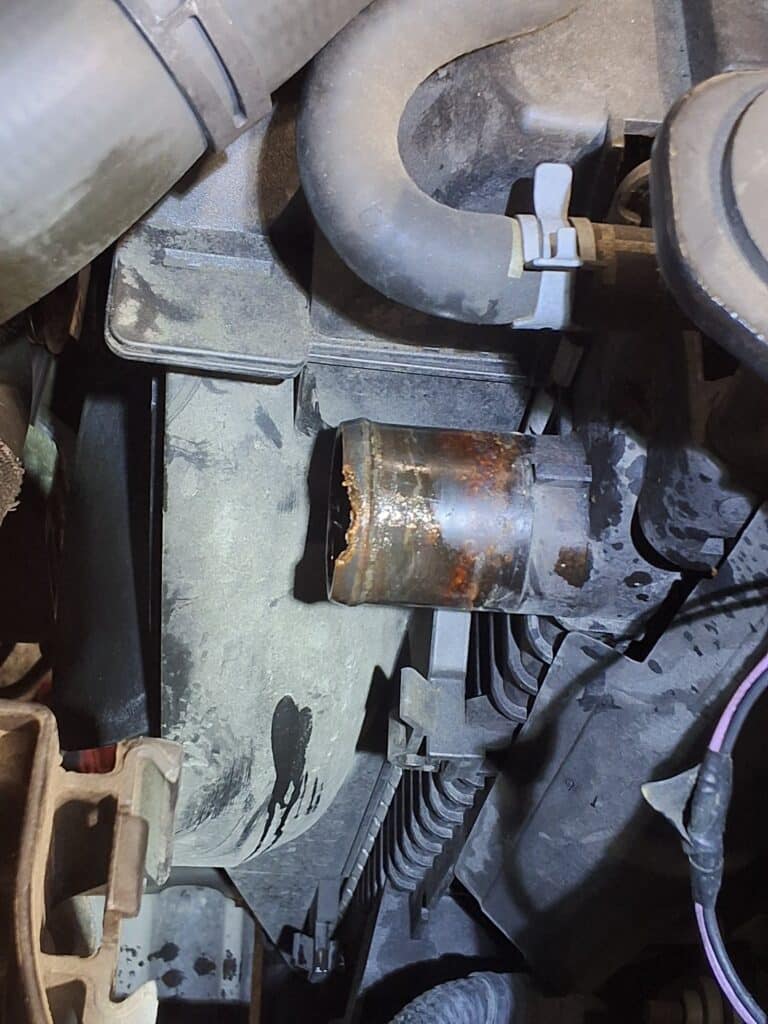
The radiator neck had become extremely brittle and was beginning to come apart. We also found transmission cooler lines leaking near the radiator area. The owner approved replacement of the radiator, upper and lower radiator hoses, the expansion tank hose and the leaking transmission cooler lines.
At nearly 20 years old, this LR3 is a useful example of something we see on many aging vehicles: the rubber hose may not be the only cooling-system part that deserves attention. Molded plastic radiator necks, connectors, tanks and fittings spend their lives exposed to heat, cooling-system pressure, vibration and thousands of heating and cooling cycles.
As those plastic parts age, they can become hard and brittle.
Why Do Plastic Cooling-System Fittings Become Brittle With Age?
Plastic cooling system parts gradually lose some of their original toughness after years of heat, pressure and vibration. On an older vehicle, a connector that was strong and slightly flexible when new can eventually become hard enough that cracking becomes a concern.
Modern cooling systems use a surprising amount of molded plastic. Radiator tanks, hose necks, quick-connect fittings, thermostat housings, expansion tanks and complex hose assemblies can all incorporate plastic because it allows manufacturers to create lightweight parts in shapes that would be difficult or expensive to manufacture from metal.
Those parts operate in a harsh environment.
Every drive brings the engine and coolant up toward operating temperature. When the vehicle is parked, the system cools again. Coolant expands as it heats, cooling system pressure changes, and the components around the engine experience normal vibration and movement.
One heat cycle is nothing unusual. Thousands of them over 15 or 20 years are a different story.
Eventually, aged plastic may become noticeably hard, discolored or brittle. Cracks can develop around hose necks, fittings and other molded areas. In some cases there may already be dried coolant residue or a small seep. In others, the plastic can be near the end of its useful life without producing a dramatic leak yet.
That is why older cooling systems often require more time and care during inspection and service. An experienced technician is looking beyond the rubber portion of a radiator hose and paying attention to the plastic fitting, radiator neck, seal and surrounding connection too.
What Did We Find on This 2006 Land Rover LR3?
The radiator neck on this LR3 had deteriorated to the point that the plastic was visibly brittle and beginning to come apart. That made the radiator itself part of the repair rather than simply installing another hose onto an aging connection.
The vehicle was close to two decades old, and the approved cooling system repair included the radiator along with the upper and lower radiator hoses and the expansion tank hose.
That is an important distinction on an older vehicle.
If the radiator connection itself is deteriorating, replacing only the rubber hose does not restore the strength of the plastic neck underneath it. The condition of both sides of the connection matters.
This is also why cooling system work on an older vehicle can require additional care and inspection time. A technician has to consider the condition of surrounding fittings and connections instead of assuming every original plastic component is still as strong as it was when the vehicle was new.
Why Are So Many Radiators Made From Aluminum and Plastic?
A plastic tank aluminum-core radiator combines lightweight construction with efficient heat transfer. The aluminum core removes heat from the coolant while molded plastic tanks provide the coolant passages, hose connections and mounting shapes needed to fit the radiator into the vehicle.
The aluminum section in the center contains the tubes and fins that transfer engine heat into the air passing through the radiator.
The plastic tanks distribute coolant through that core.
These two sections are not normally welded together. On this common radiator design, the plastic tank is mechanically crimped and sealed to the aluminum-core assembly.
That detail matters because the connection has to remain sealed while the radiator repeatedly expands and contracts through years of temperature and pressure changes.
A properly manufactured radiator is designed for those conditions. But like every mechanical component, it does not last forever.
Why Can Plastic-Tank Radiators Begin Leaking at the Tank-to-Core Connection?
The tank-to-core joint is another area that can become a leak point as a radiator ages. The plastic tank, sealing material and mechanically crimped connection all have to maintain a pressure-tight seal while living through repeated temperature changes.
Plastic and aluminum do not respond to heat in exactly the same way. The radiator assembly is engineered to handle those differences, but years of thermal cycling and pressure loading still place stress on the complete assembly.
Depending on the radiator and how it ages, leaks may eventually develop from several places:
a brittle molded hose neck
a crack in a plastic tank
a deteriorated fitting
a seal or connection at the plastic tank and aluminum core
damage to the aluminum core itself
On this Land Rover, the obvious age-related problem we found was the brittle radiator neck.
On another older vehicle, the first visible leak may show up along the plastic tank or tank-to-core connection instead.
That is why we inspect the radiator as an assembly rather than treating every coolant leak as a bad rubber hose.
Why Extra Care Matters When Servicing an Older Cooling System
Older plastic cooling-system parts deserve more care because age can make them much less forgiving than newer components. A technician working on an older vehicle has to expect that original fittings, connectors and plastic tanks may be brittle even when they are still assembled and holding coolant.
That changes how the work is approached.
There may be more time spent inspecting connections, identifying which parts should be reused and determining whether an adjacent component is strong enough to remain in service.
It also means the repair plan may change once the actual condition of the surrounding components is visible.
The goal is not to replace every plastic part simply because the vehicle is old. It is to recognize when age has clearly changed the condition of the material and make the repair accordingly.
On this LR3, the radiator neck itself was already coming apart. Replacing the radiator provided a sound new connection for the replacement hoses rather than relying on deteriorated plastic.
Why Replace the Radiator Hoses at the Same Time?
Replacing aged radiator hoses while installing a new radiator can make sense when their condition and service history support it. It gives the new radiator sound hose connections instead of reinstalling older cooling-system components that may already have many years of heat exposure.
This LR3 received new upper and lower radiator hoses along with the expansion-tank hose.
That did not happen simply because the odometer showed 128,000 miles.
The age of the vehicle, condition of the cooling-system connections and the fact that the system was already being opened for radiator replacement all became part of the repair decision.
There is also practical value in handling related work together. When a cooling system is already drained and opened for radiator replacement, replacing known aged hoses can avoid repeating much of the same cooling-system service later.
The Inspection Found a Separate Transmission Fluid Leak Too
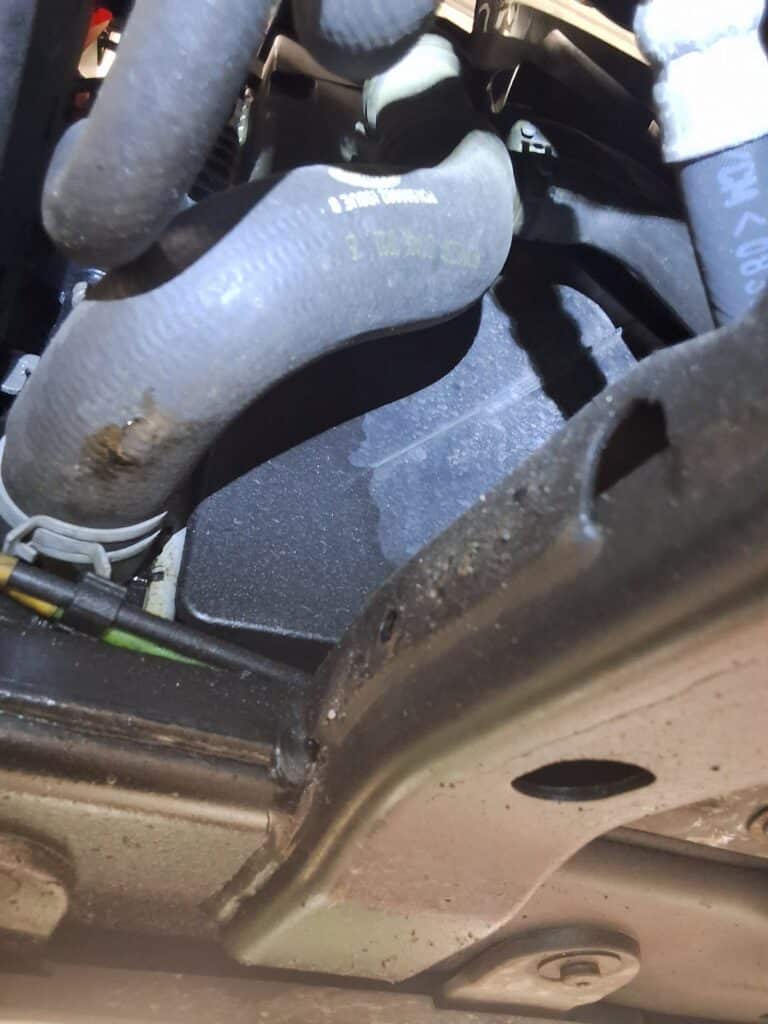
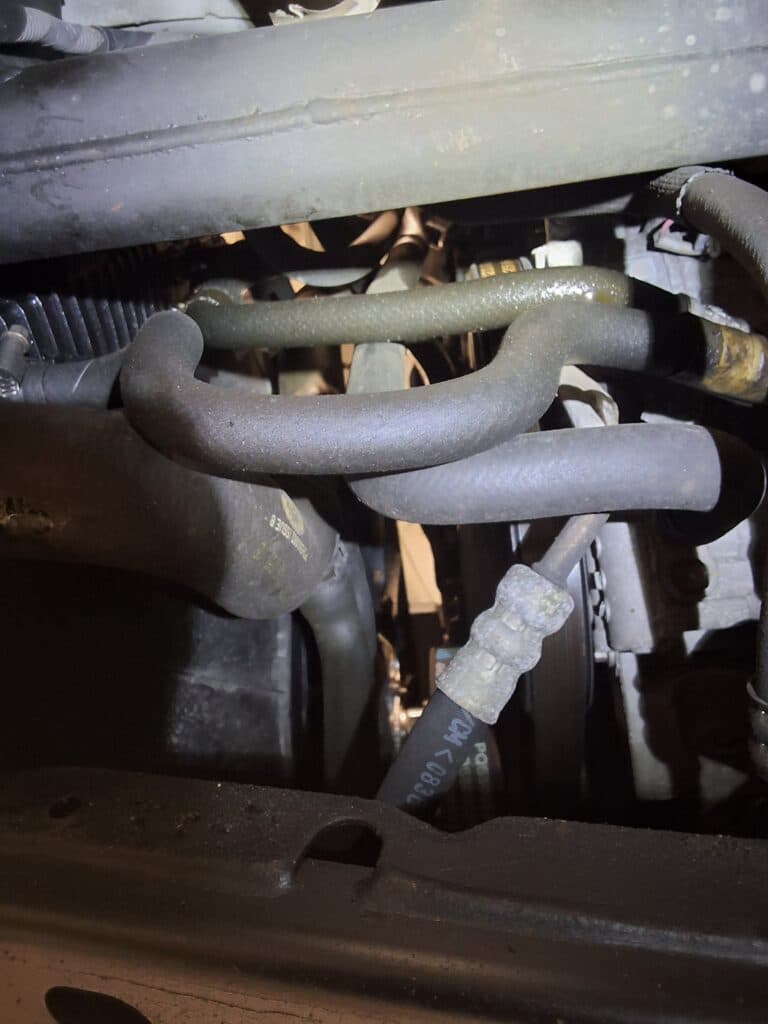
The transmission cooler lines were also leaking near the radiator area, creating a second fluid-system problem that needed its own repair. Those lines carry transmission fluid and are separate from the engine coolant circulating through the radiator.
This is another reason identifying the actual fluid is so important.
A wet area near the front of a vehicle is not automatically a radiator leak.
Engine coolant and transmission fluid can both be present around a radiator assembly because many vehicles use a transmission fluid cooler integrated into or located alongside the radiator.
On this LR3, the transmission cooler lines were replaced separately from the cooling-system hoses.
The repair also included transmission fluid service after the cooler-line work.
What Can Happen If a Brittle Cooling-System Part Finally Fails?
A cracked radiator neck or plastic fitting can release coolant quickly enough to turn a small component failure into an overheating problem. The cooling system depends on maintaining the correct coolant level and pressure so it can move heat away from the engine.
A small plastic connection may not look important compared with an engine.
It is.
If that connection breaks and coolant escapes, the engine can lose its ability to control temperature. A driver may notice a coolant warning, rising temperature gauge, steam, coolant odor or coolant underneath the vehicle.
Continuing to drive an overheating engine can turn a radiator or hose repair into a much more expensive engine repair.
If an older vehicle suddenly loses coolant or begins overheating, shutting it down and having the cooling system inspected is much safer than trying to stretch the trip a few more miles.
What Should Be Inspected on an Older Land Rover Cooling System?
A useful cooling-system inspection looks at the entire path the coolant takes, not just the first visible hose. On an older Land Rover, that means paying attention to hoses, molded plastic connections, radiator tanks and necks, the expansion tank, clamps, fittings and signs of leakage throughout the system.
Things that deserve attention include:
dried coolant residue
visible cracks
plastic that has become brittle or discolored
swollen or unusually hard hoses
soft spots in rubber hoses
damaged hose ends
seepage around fittings
coolant around the radiator tank or tank-to-core connection
repeated coolant loss
coolant odor after driving
Age does not automatically mean every component needs replacement.
Condition determines the repair.
The point of inspecting an older cooling system carefully is to find the parts that are actually deteriorating before they get to choose the time and place they finally fail.
Land Rover LR3 Cooling-System FAQ
Can plastic radiator parts really become brittle with age?
Yes. Plastic cooling-system components are exposed to high under-hood temperatures, cooling-system pressure and repeated heating and cooling cycles. Over time, some plastic connectors, necks and tanks can become harder and more brittle.
Is the plastic radiator tank welded to the aluminum radiator core?
Not on the common plastic-tank/aluminum-core radiator design discussed here. The plastic tank is mechanically crimped and sealed to the radiator core.
Does a leaking radiator always mean the aluminum core failed?
No. Coolant can leak from the radiator core, a plastic tank, a molded radiator neck, a seal, the tank-to-core connection or a hose connection. Finding the exact leak location determines what needs to be repaired.
Should radiator hoses be replaced whenever a radiator is replaced?
Not automatically. Their age, condition and service history matter. On this older LR3, the radiator hoses and expansion-tank hose were replaced as part of the approved cooling-system repair.
Why can an older cooling-system repair take extra time?
Older plastic fittings and connectors can become brittle, so the surrounding components need to be inspected and handled carefully. The technician also has to determine which connected parts are still in good condition and which ones should be replaced while the system is apart.
Can a small coolant leak cause engine damage?
Yes. If enough coolant is lost, the engine can overheat. That is why an active cooling-system leak or visibly deteriorated fitting deserves attention before it becomes a larger failure.
Land Rover Cooling-System Repair in Magnolia and Seattle
If your Land Rover is losing coolant, developing a coolant smell, showing a temperature warning or simply has an aging cooling system that needs a closer inspection, 34th Street Garage can help.
We inspect the complete cooling system, identify where the deterioration or leak is occurring, and explain what should be repaired now and what can continue to be monitored.
34th Street Garage
2410 34th Ave W
Seattle, WA 98199
206-283-3448