Buying an older Toyota 4Runner can be exciting.
But when the odometer reads 262,000 miles and the service history has some big gaps, there is another question that matters just as much as how the truck drives:
What exactly did I just buy?
A recently purchased 1996 Toyota 4Runner SR5 came to 34th Street Garage with that kind of situation.
The new owner knew the previous owner had installed a battery cutoff switch because of a suspected battery drain.
There were also questions about an aftermarket Bluetooth audio receiver and whether it might be contributing to the problem.
The goal was not to start replacing everything on a nearly 30 year old truck.
The goal was to establish a maintenance baseline.
What is working?
What needs attention now?
What has no reliable service history?
And what can reasonably be planned for later?
That is the kind of information that gives a new owner a much clearer picture of the vehicle they just purchased.
First, We Had to Figure Out Why It Sometimes Wouldn’t Start
The battery cutoff switch looked suspicious.
But suspicious is not the same thing as failed.
After the 4Runner sat for a period of time, our technician attempted to start it.
The starter clicked, but the engine did not crank.
After several attempts, it eventually started.
Once running, the vehicle continued starting normally during repeated attempts.
The cutoff switch itself was tested and was working.
The intermittent clicking and no crank condition instead pointed toward a failing starter.
The inspection also found that the negative battery cable needed repair and that damaged aftermarket wiring with a fuse needed attention.
That is a good example of why we test before making assumptions.
The previous owner’s workaround was part of the story.
It was not automatically the cause of the problem.
A Maintenance Baseline Starts With What We Can Verify
When you buy an older vehicle, you may get:
a folder full of receipts,
a few handwritten notes,
some online history,
or almost nothing.
This 4Runner had more than 262,000 miles.
Some maintenance history was available.
Other important areas had little or no documented history.
That means the inspection becomes especially valuable.
We can compare what we know about the vehicle’s history with what we can physically see today.
That process uncovered several areas worth addressing.
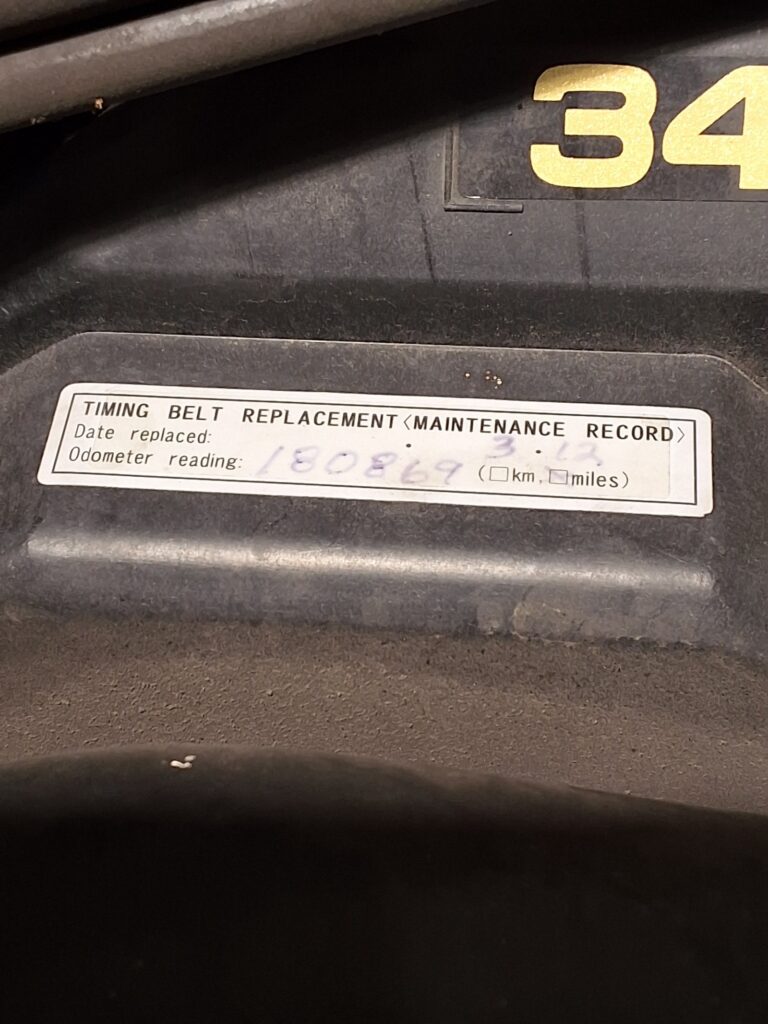
One of the biggest was the timing belt.
The Timing Belt Had Been Replaced Before, But It Had Been a Long Time
The inspection history indicated that the timing belt had last been replaced about 14 years earlier.
That is very different from having no idea whether it was ever done.
But it is still information we have to act on.
Based on the history and inspection, the timing belt service was recommended and approved.
The repair included the timing belt and water pump, along with related components required to complete the job.
The thermostat, accessory belts and fresh vehicle specific coolant were also part of the repair plan.
For a new owner, this is exactly the kind of maintenance history we want to establish.
After the repair, there is no longer a question of:
“I wonder when somebody last did the timing belt?”
Now there is a known starting point.
The Cooling System Had a Problem We Could See
The radiator provided a very different kind of evidence.
This was not simply:
“We don’t know when it was serviced.”
The inspection found an active problem.
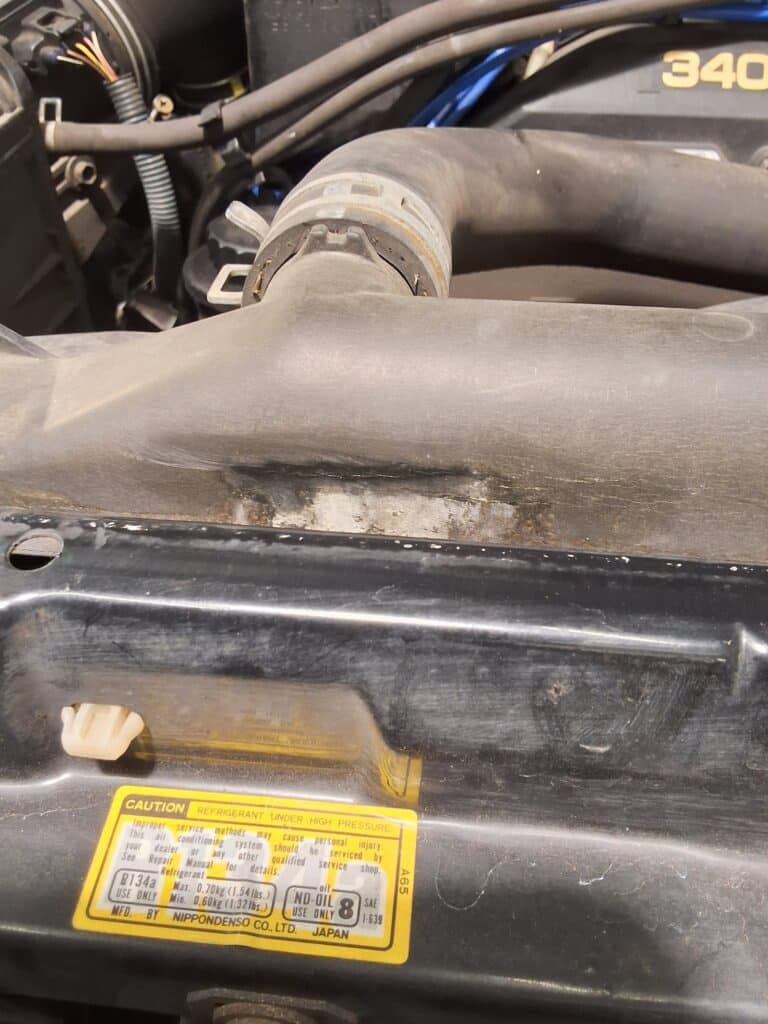
The plastic upper radiator tank showed numerous small fractures and the radiator was leaking.
That changed the priority.
The radiator and related hose work were approved along with the timing belt and water pump service.
When a cooling system already has a visible leak, that is no longer just a maintenance history question.
It is a current condition problem.
Fluid Condition Gave Us More Clues
Service records are useful.
Fluid condition gives us another piece of information.
During this inspection:
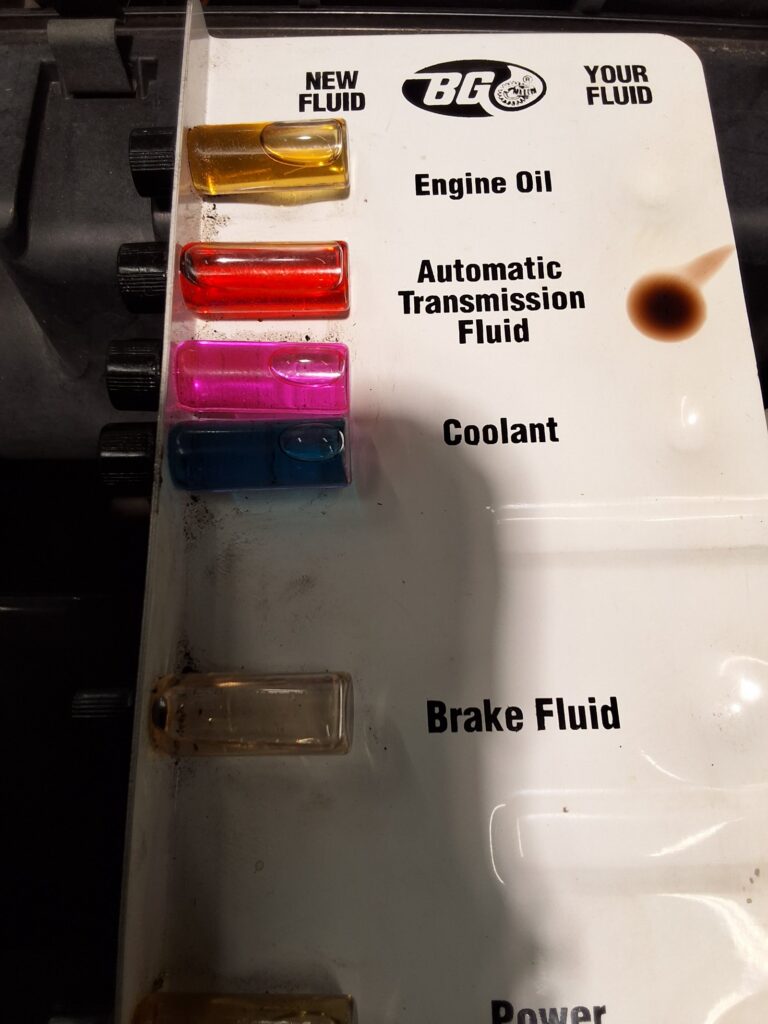
The brake fluid failed its condition test.
The automatic transmission fluid appeared very dark.
The power steering fluid was dirty rather than the expected clean red appearance.
Those findings helped determine which maintenance items made sense to address during this visit.
The owner approved brake fluid service, transmission fluid service and power steering service.
Again, this is what a maintenance baseline is supposed to do.
Instead of saying:
“It’s an old truck. Change every fluid.”
we can look at:
what history is available,
what condition the fluid is actually in,
and what the owner wants to prioritize.
The Inspection Also Found Steering Play
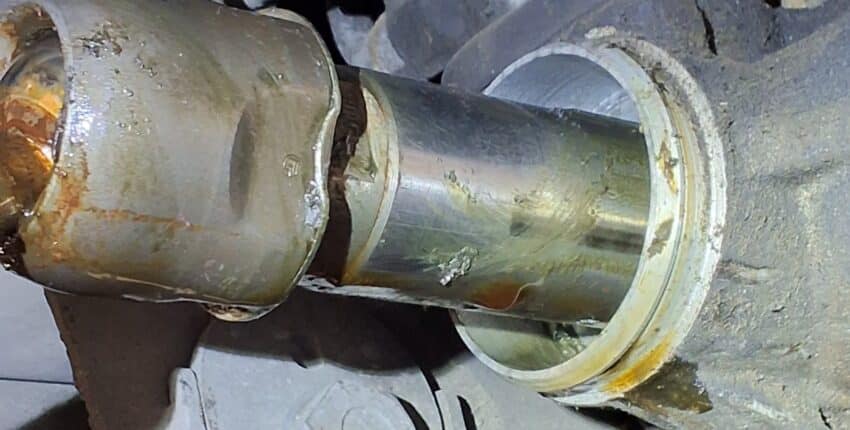
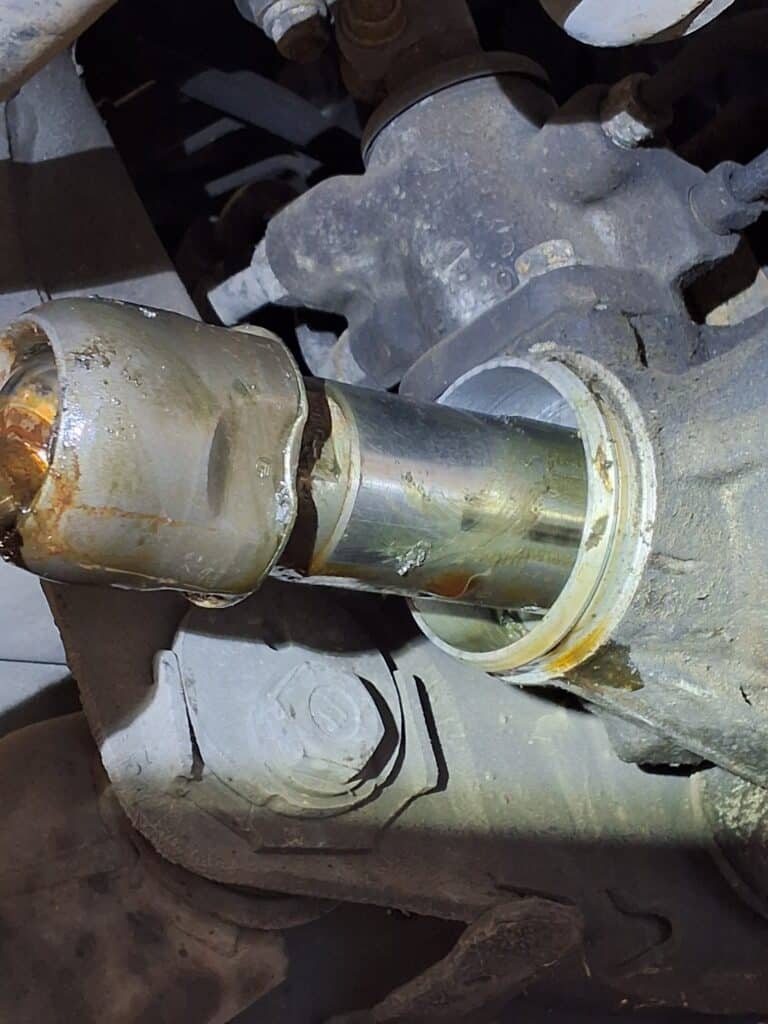
The left inner tie rod had excessive play.
That is a condition based finding.
It is not something we recommend simply because the vehicle has 262,000 miles.
The actual component had measurable looseness.
The left inner tie rod was replaced, and the vehicle received a wheel alignment.
The front sway bar links were also found broken and were addressed during the visit.
This is another reason a used vehicle inspection is useful.
Mileage tells us the 4Runner has been driven a long way.
It does not tell us which steering or suspension components are worn today.
The inspection does this.
Not Everything We Found Had to Be Repaired Immediately
This is one of the most important parts of the story.
The inspection found more than the work completed during this visit.
The front control arm bushings were cracked.
The front shocks appeared to be older original equipment.
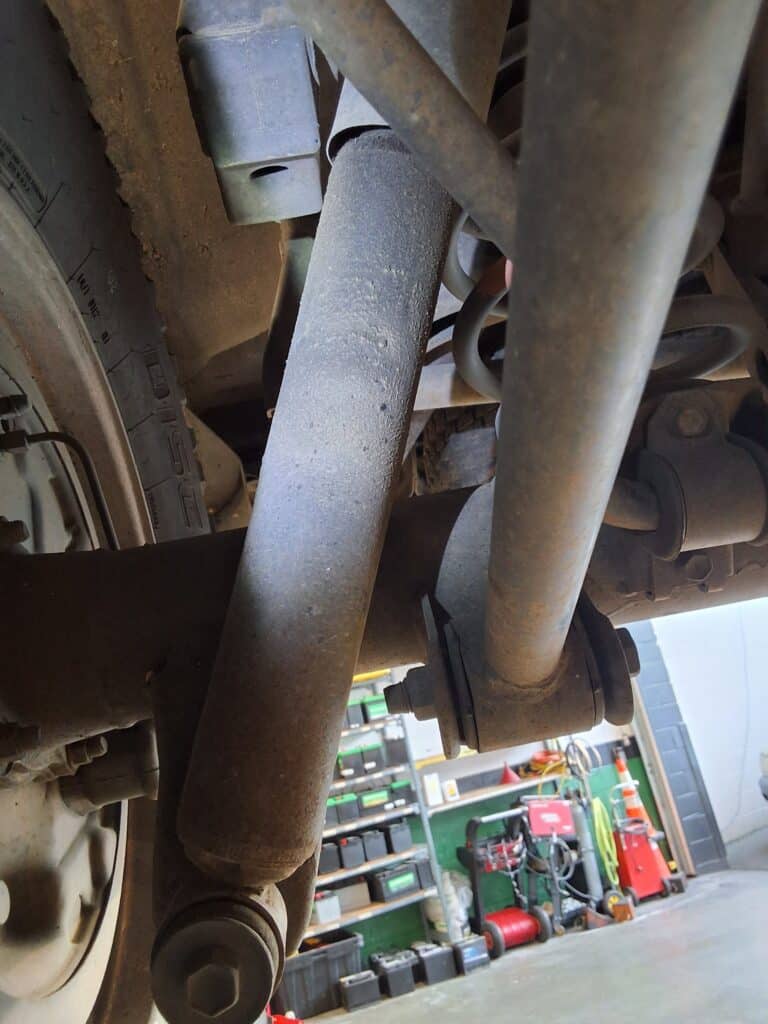
The rear shocks were leaking.
There was no documented service history for the front differential, rear differential or transfer case.
Those are all useful findings.
But the owner did not have to approve everything at once.
Some items were deferred.
That gives the owner something extremely valuable:
a plan.
Instead of leaving the shop with another pile of unknowns, there is now a clearer list of:
what has been handled,
what still needs attention,
and what can be budgeted or monitored.
That is what we mean by building a maintenance baseline.
What Was Actually Addressed During This Visit?
The work completed gave the owner a much better known starting point.
It included:
Starter replacement
Timing belt and water pump service
Thermostat and related belt work
Radiator and coolant hose repair
Left inner tie rod replacement
Front sway bar link replacement
Wheel alignment
Automatic transmission fluid service
Power steering fluid service
Brake fluid service
Engine air filter replacement
along with the oil service and inspection that started the visit.
That’s a substantial amount of work.
But the important part is that each item came from either:
a verified problem,
service history,
fluid condition,
or an actual inspection finding.
This Wasn’t About Making a 262K Mile 4Runner “Like New”
A vehicle with more than 262,000 miles does not need to become a restoration project just because it enters a repair shop.
The goal is to help the owner understand what they have.
With an older vehicle, there may always be additional cosmetic, suspension or maintenance items that could eventually be addressed.
The better question is:
What does the vehicle need to support the way this owner wants to use it?
That answer may be different for:
a daily commuter,
a second vehicle,
a weekend adventure vehicle,
or a truck someone hopes to keep for many more years.
A useful inspection gives the owner enough information to make those decisions.
The Previous Owner’s Repairs Are Part of the History, Not the Diagnosis
The battery cutoff switch on this 4Runner is a good example.
The new owner knew it had been installed as a workaround for a suspected battery draw.
It would have been easy to assume:
“There’s the problem.”
Testing told us otherwise.
The switch functioned.
The intermittent no crank condition pointed toward the starter.
That distinction matters whenever we inspect an older vehicle that has aftermarket wiring, modifications or previous owner repairs.
What was done before can give us clues.
We still test the vehicle in front of us.
Should You Replace Everything With No Service Record?
Not necessarily.
Missing service history means we have less information.
It does not mean every component is automatically bad.
A good baseline inspection can use several types of evidence:
Documented history
Component condition
Fluid condition
Visible leaks
Measured wear or play
Current symptoms
Known recent repairs
Then we can prioritize.
That’s far more useful than simply making a giant list based on mileage.
Why a Maintenance Baseline Matters After Buying an Older Vehicle
Once this 4Runner’s current work was completed, the owner had something they did not have when they bought it:
a clearer starting point.
They now knew the starter had been addressed.
They knew when the timing belt and water pump had been done.
They knew the leaking radiator had been replaced.
They knew several important fluids had been serviced.
They knew steering play had been repaired.
And they also knew which suspension and 4WD maintenance items remained on the future list.
That history becomes valuable the next time the vehicle comes in.
Instead of starting over and asking:
“Has this ever been done?”
we have a much better record to work from.
Older Toyota 4Runner Maintenance FAQ
What should I do first after buying an older Toyota 4Runner?
Start by gathering whatever maintenance records are available and having the vehicle inspected. The goal is to identify current problems, verify recent maintenance and determine where important history is missing.
Does a 262,000 mile 4Runner need everything replaced?
No. Mileage alone does not determine every repair. On this 4Runner, recommendations came from actual symptoms, inspection findings, fluid condition and available service history.
Why was the timing belt replaced?
The available history showed that the timing belt had been replaced previously, but that service was already about 14 years old. The owner approved a new timing belt and water pump service as part of establishing a known maintenance baseline.
What caused the intermittent no start problem?
The vehicle produced an intermittent click and no crank condition after sitting. Testing indicated the starter was failing. The battery cutoff switch that initially looked suspicious was tested and functioned properly.
Did everything found during the inspection get repaired?
No. Several suspension items and 4WD fluid services were documented but deferred. The owner completed a substantial group of higher priority repairs and left with a clearer plan for what remained.
Why are service records so useful on an older vehicle?
Records help avoid guessing. Knowing when a timing belt, coolant service or other major maintenance item was last performed gives the shop and owner a much better starting point.
Toyota 4Runner Service in Magnolia
If you recently bought an older Toyota 4Runner and aren’t sure what has been done, you don’t have to replace everything just to establish a starting point.
We can inspect the vehicle, review whatever history is available, identify current problems and help build a maintenance plan around the vehicle you actually own.
34th Street Garage
2410 34th Ave W
Seattle, WA 98199
206-283-3448
Use the booking option here to schedule service.